AMERICA HAS BEEN IN A STATE OF EMERGENCY OVER THE 1979 HOSTAGE CRISIS FOR FORTY-SIX YEARS
Forty-six national emergencies are running right now. The oldest predates the internet, and eight presidents have renewed it without comment.
46 activeNational emergencies currently in force. The eldest was declared in 1979.
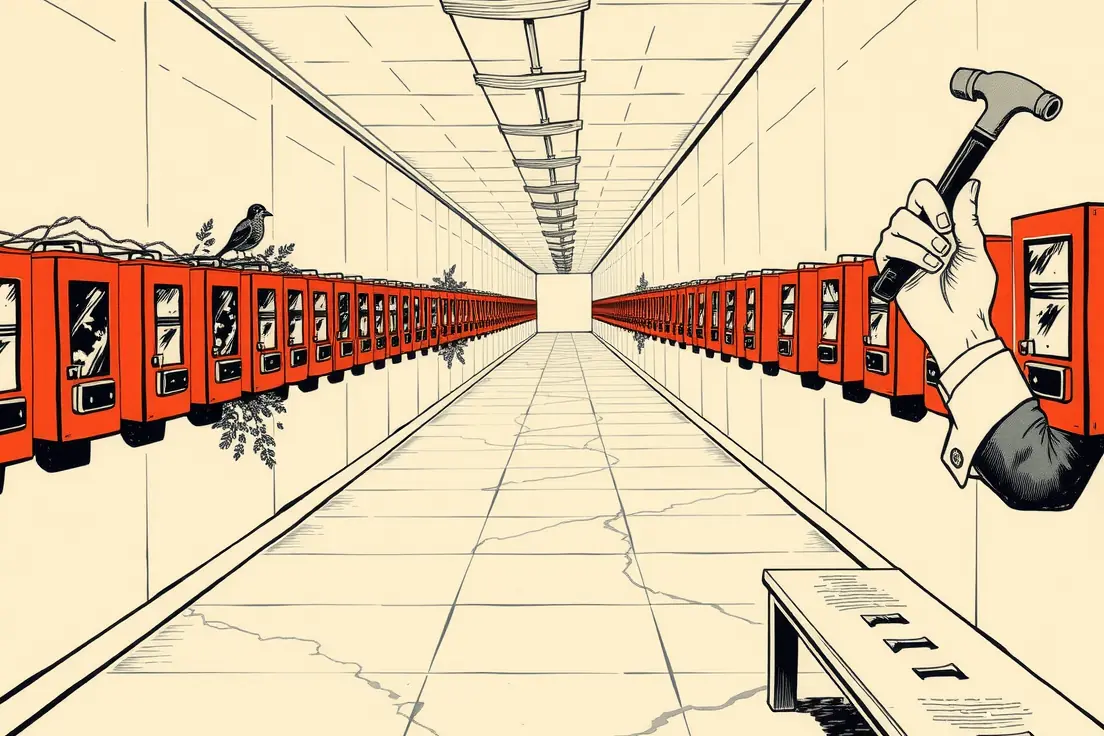
Forty-six emergencies are in force. Nothing about forty-six simultaneous emergencies is an emergency.
FACT: On November 14, 1979, ten days after the American embassy in Tehran was seized, President Carter declared a national emergency and invoked the International Emergency Economic Powers Act to freeze Iranian assets. The hostages came home in January 1981.
The oldest emergency
That emergency is still in effect. It has been renewed, annually, by eight consecutive presidents of both parties — Carter, Reagan, Bush, Clinton, Bush, Obama, Trump, Biden — for forty-six years. It is older than the World Wide Web, the fall of the Soviet Union, and most of the people now serving in Congress.
It is not alone. As of September 2025, presidents had declared 77 national emergencies invoking IEEPA, of which 46 remain active. Not forty-six crises. Forty-six declarations, each unlocking a body of standby statutory powers that Congress made available on the assumption they would be used briefly and then put away.
Why nothing ever ends
Here is why they never are. The National Emergencies Act of 1976 was written precisely to stop this — it was a post-Watergate reform, and it originally let Congress terminate any emergency by concurrent resolution, which the president cannot veto. That was the whole mechanism. In 1983, in INS v. Chadha, the Supreme Court struck down the legislative veto as unconstitutional across the federal code, and this provision went with it.
What replaced it is the reason nothing ever ends. Congress may now terminate an emergency only by joint resolution — which the president may veto — meaning two-thirds of both chambers are required to end an emergency one person declared with a signature. The safeguard was inverted. A supermajority is now needed not to grant the power but to take it back.
Congress can end an emergency — provided it can muster the two-thirds needed to override the veto of the person who declared it.
The Act’s other check is the annual renewal, which sounds meaningful and is not. Renewal requires the president to publish a notice saying the emergency continues. That is the entire procedure. Nobody votes. Nobody testifies. The 1979 notice has been re-signed forty-six times.
OPINION: The genuinely alarming part is not any single declaration — reasonable people disagree about whether a given situation warrants emergency powers. It is that there is no off-ramp, and everyone involved knows it. Powers granted for a moment become permanent by default, available to every subsequent officeholder for purposes nobody contemplated, and reclaiming them requires a supermajority that modern American politics essentially cannot produce.
The strongest case for standby powers, taken seriously
Emergencies are real and legislatures are slow. A president facing a currency collapse, a pandemic or an attack cannot wait weeks for a statute; the whole purpose of standby authority is that the tool exists before the crisis does. Congress delegated these powers deliberately, and it retains the ability to legislate them away at any time — which it has occasionally done. That some declarations linger is arguably a filing problem rather than a constitutional one: an unused authority sitting on the books harms nobody.
Except that they are not unused. Emergency declarations are the live authority underpinning sanctions regimes, tariff actions and asset freezes with enormous economic effect — which is exactly why forty-six of them remain open.
What would fix it, and who is stopping it
The cleanest fix is a sunset: declarations lapse after thirty days unless both chambers affirmatively vote to continue them, reversing the burden so inertia ends a power instead of extending it. That needs one statute — no amendment, no court, and it would restore what the 1976 Act intended before Chadha knocked the mechanism out. Bills exist in every Congress. None passes, because the president would veto it and overriding requires the same two-thirds that makes the current ratchet unstoppable.
That is a ratchet, and it only turns one way. Every president inherits everything the last one accumulated and adds to it. If you find that comfortable when your side holds the office, the arithmetic is straightforward: the other side will hold it roughly half the time, and they will inherit the same drawer of unlocked powers, on the same terms, with the same absence of a way to close it.
Congress can end an emergency — provided it can muster the two-thirds needed to override the veto of the person who declared it.